cross-icon
Logo

Request a Demo

Schedule a demo in 30 seconds.

Capterra-best-ease-of-use-2023 Capterra

A Guide To: The Building Safety Act 2022

2025 changes and beyond

Download Now

Introduction

A legal plot twist for FMs everywhere

If you’re a Facilities Manager, you’re probably juggling maintenance schedules, compliance logs, broken light sensors, and maybe a contractor who thinks "urgent" means next week.

Now toss in the Building Safety Act 2022, and the stakes get higher.

This legislation is a serious shake-up. Brought in after the Grenfell Tower tragedy, it’s aimed at making buildings safer, more accountable, and transparently managed.

And FMs will be right at the heart of it!

Whether you're managing residential blocks, hospitals, care homes, student accommodation, or mixed-use high-rises, if the building is tall enough or contains multiple dwellings, this legislation lands firmly on your to-do list. Even sectors not officially classified as higher-risk are feeling the ripple effects in terms of best practices and compliance expectations.

This white paper breaks down what you need to know and do, with a focus on practical steps, helpful resources, and how to stay on the right side of the Building Safety Regulator (BSR).

What is the Building Safety Act 2022?

Think of it as the health & safety handbook’s big sibling, one that’s legally binding, digitally demanding, and obsessed with accountability.

1-4

Key changes

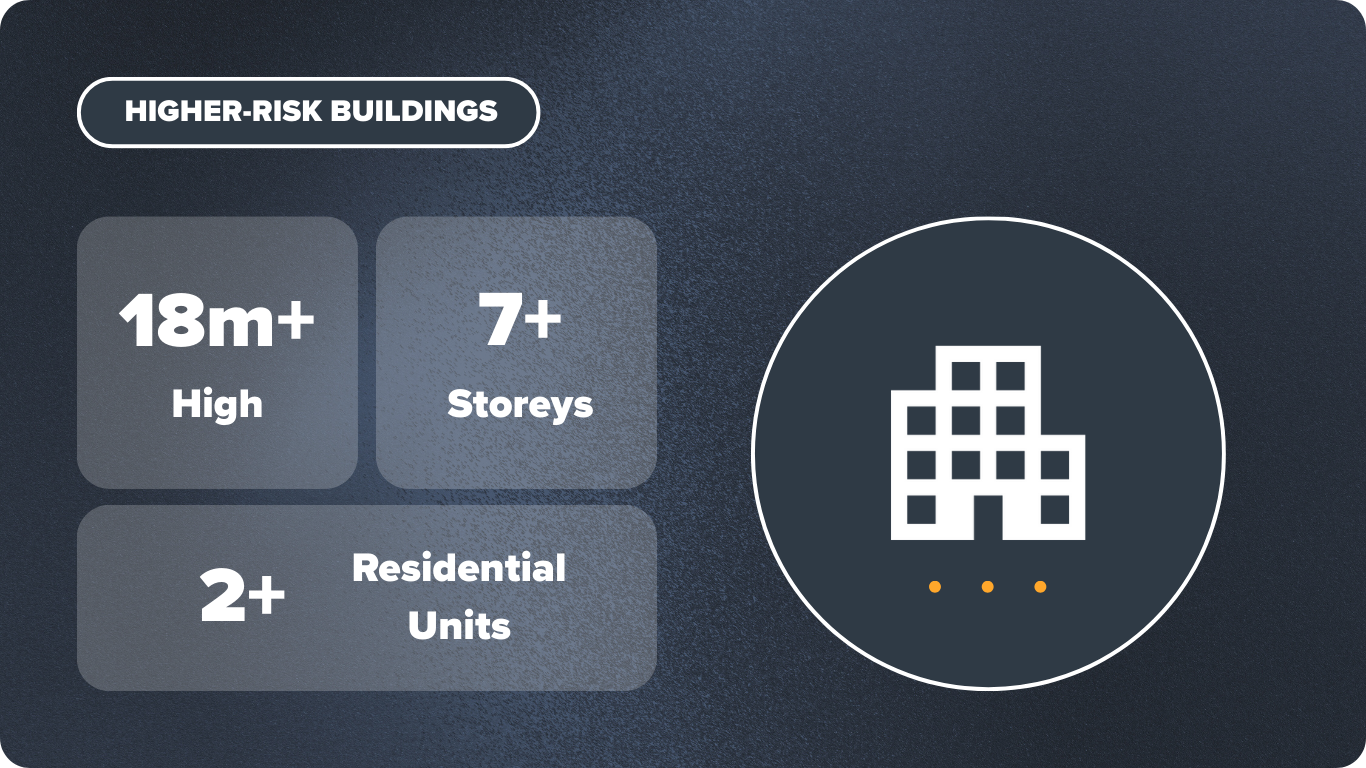
  • Applies to ALL buildings but has strict rules for Higher-Risk Buildings (HRBs): 18m+, 7+ storeys, and 2+ residential units
  • Accountable Persons (APs) and Principal Accountable Persons (PAPs) must be clearly defined
  • You must maintain a digital "Golden Thread" of safety information
  • Buildings must be registered with the BSR
  • Mandatory reporting, safety case files, and resident engagement are now legally required
  • Introduction of the Gateway Process for planning and construction
  • Stricter fire safety and fire risk assessment requirements
  • Clearer expectations around competence and capability, aligned to standards like PAS 8673
  • Tightened rules around building regulations, construction products, and feature replacements
  • Expansion of building control regulation and oversight of building works and defects
  • More defined roles for assurance, procurement, and accountability
  • Introduction of fees and enforcement powers by the BSR
  • Extension of liability periods and limitation reform for defective buildings

What FMs are now expected to do


You might not be the named AP OR PAP, but if you're running the show on site, this legislation is your reality.

  • Support registration of applicable buildings
  • Maintain up-to-date digital records (the golden thread)
  • Ensure systems, contractors, and documentation meet new safety expectations.
  • Actively engage with residents on building safety issues
  • Prepare for audits and inspections from the BSR Understand and apply safety management systems that include regular assessments and updates
  • Work with competent professionals, including qualified fire risk assessors, and understand how to procure assessments responsibly
  • Recognise when defects or building works impact compliance and manage repairs within the framework of the new regulations
  • Stay informed about construction product compliance, procurement processes, and how these connect to future liability

If it affects safety, it needs to be in the golden thread. think of it as the building's living, breathing memory bank.

Calendar of changes and key milestones

3-Jan-09-2026-10-41-14-4764-AM

2025 ongoing

  • Building Assessment Certificates (BACs): The Building Safety Regulator (BSR) continues calling in Principal Accountable Persons (PAPs) of existing high-rise residential buildings (over 18m or 7 storeys) to apply for BACs.
  • Golden Thread of Information: PAPs must continuously manage the digital "golden thread" of safety information for high-rise buildings.
  • Developer Remediation: Developers who signed the government's pledge continue working to assess and remediate dangerous cladding in buildings they developed, with an interim target of 80% completion by July 2026.
  • Remediation Acceleration Plan: The government's plan continues with increased funding for enforcement actions against non-compliant "bad actors" and supporting local remediation efforts.

March 2025

  • Waking Watch Replacement Fund: The deadline for applications to the Waking Watch Replacement Fund was extended to the end of March 2026, with an additional £21.11 million made available.
  • Building Control Guidance: New guidance was published to help applicants prepare building control applications for higher-risk buildings, addressing a high rate of invalid submissions.
  • Leasehold Dispute Resolution: The government issued new guidance to support the resolution of disputes under the Developer Remediation Contract.

July 2025

  • Retrospective Leaseholder Protections: The Court of Appeal ruled that leaseholder protections under the BSA have retrospective effect. This clarified that qualifying leaseholders are protected from historic building safety costs.

Autumn 2025

  • Building Safety Levy: Secondary legislation for the Building Safety Levy, charged on new residential buildings, is expected to come into force. It will apply to all new residential builds requiring building control approval, with exemptions for smaller developments and affordable housing.

Late 2025

  • Review of Higher-Risk Building Definition: Following recommendations from the Grenfell Tower Inquiry, the government committed to reviewing the definition of a "higher-risk building" to potentially include factors beyond height, such as the vulnerability of residents.
  • Approved Document Updates: Revised Approved Documents, the official guidance for building regulations, are expected to be published by the BSR.

March 2026

  • Future Homes Standard: Regulations implementing the Future Homes Standard are set to take effect, with the aim of reducing carbon emissions from new residential buildings.
  • Electrical Installation Inspections: The BSR intends to complete a cost-benefit analysis on requiring regular electrical installation inspections for relevant buildings.

April 2026

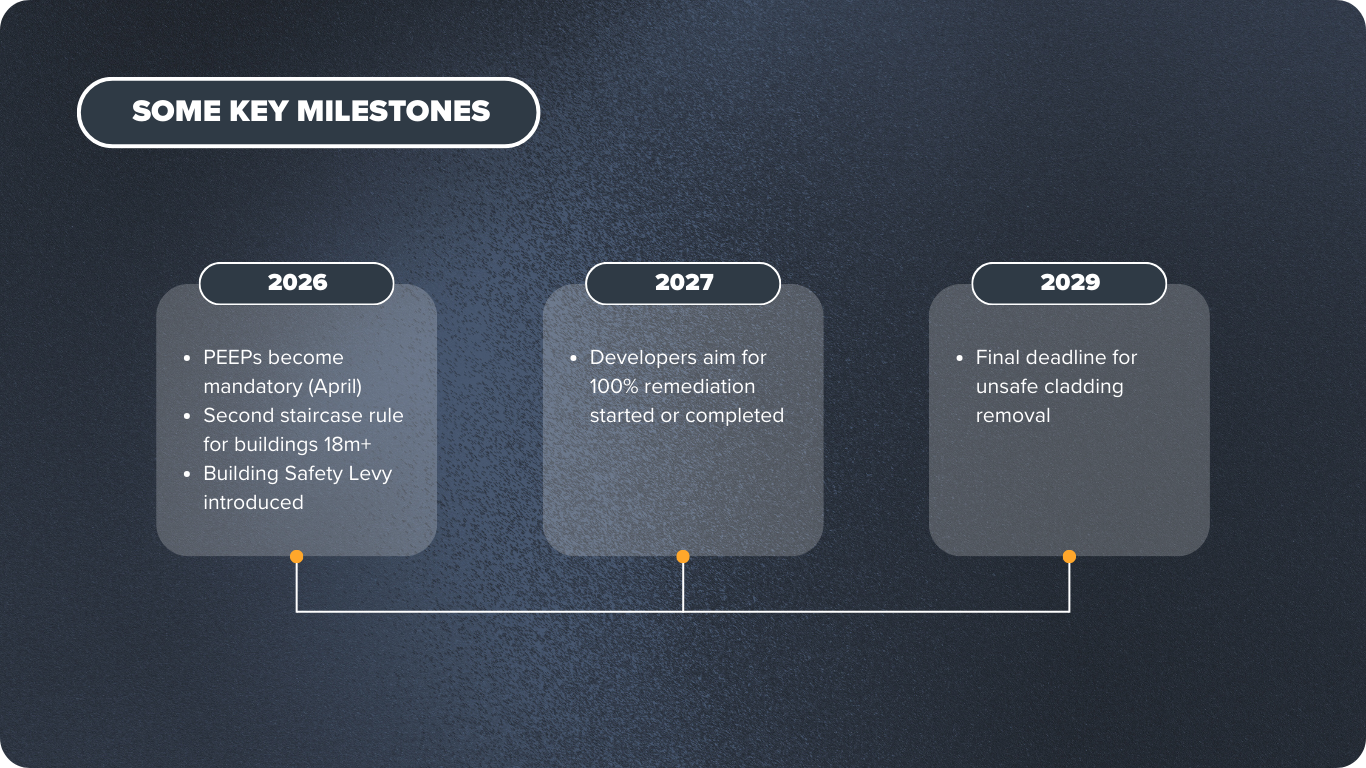
  • Personal Emergency Evacuation Plans (PEEPs): New regulations are scheduled for implementation, requiring building owners to create PEEPs for vulnerable residents in specific buildings.

October 2026

  • Building Safety Levy: The Building Safety Levy is proposed to officially take effect.
  • Second Staircase Requirement: New rules mandating a second staircase in blocks of flats over 18m are scheduled to take effect, subject to transitional provisions.

2027

  • Full Remediation Target: By the end of July 2027, developers who signed the government pledge aim to have completed or started remediation works on all their in-scope buildings.

2029

  • Final Cladding Deadline: This is the target date for removing unsafe cladding in buildings 18m or over within governmentfunded schemes.

3 common FM challenges

(And how to beat them)

4-Jan-09-2026-10-54-00-9852-AM

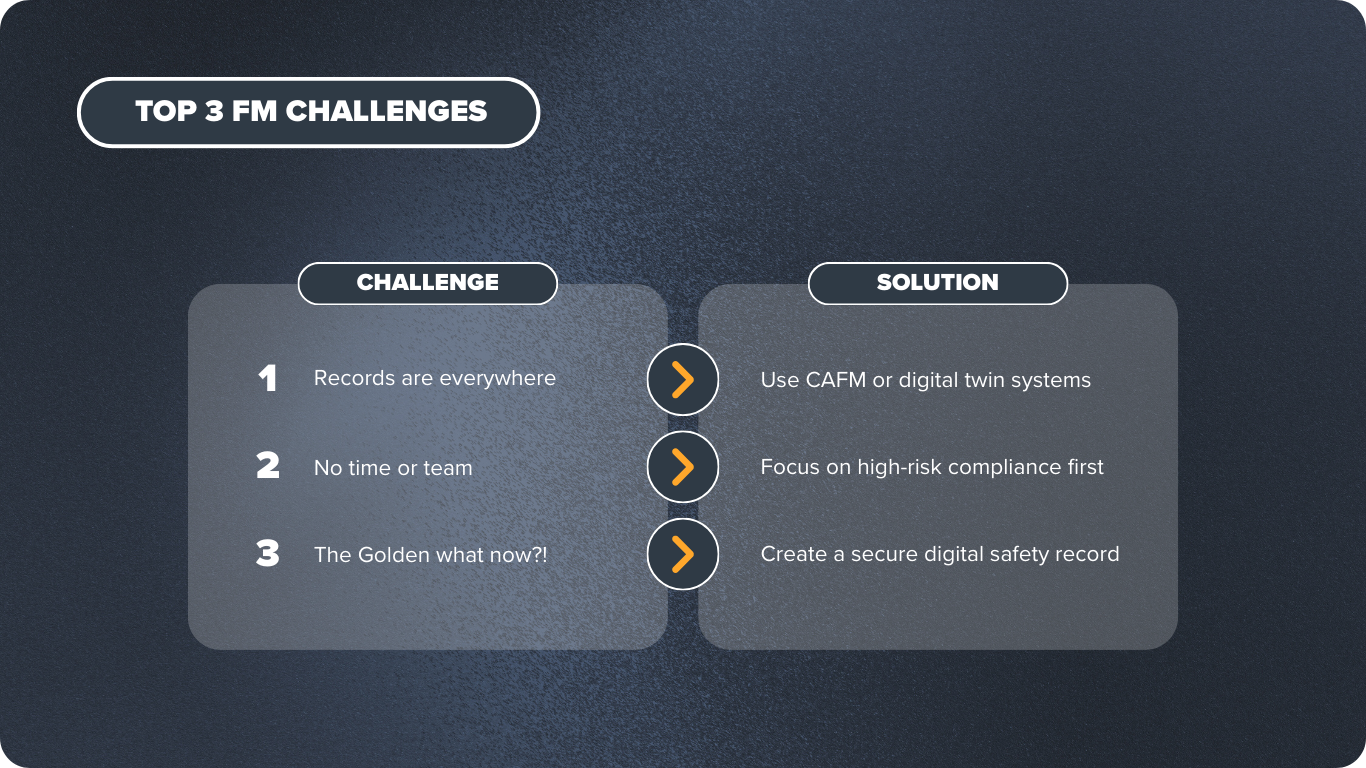
1. Our records are everywhere

Solution: Invest in CAFM or digital twin systems that allow real-time updates, audits, and access control. No more Frankenstein’s monster of paper logs and forgotten SharePoint folders.

2. I don't have the time or team

Solution: Focus on high-impact compliance areas first. Use external specialists or software providers to plug gaps. This is one of those moments where outsourcing is smart, not lazy.

3. The Golden what now?!

Solution: The "golden thread" is a secure digital record that tracks a building’s safety data across its lifecycle. Think: fire doors, HVAC, materials, floor plans, inspections, all in one place, updated in real time.

Practical steps to compliance

 
5-Jan-09-2026-10-57-23-7634-AM
 
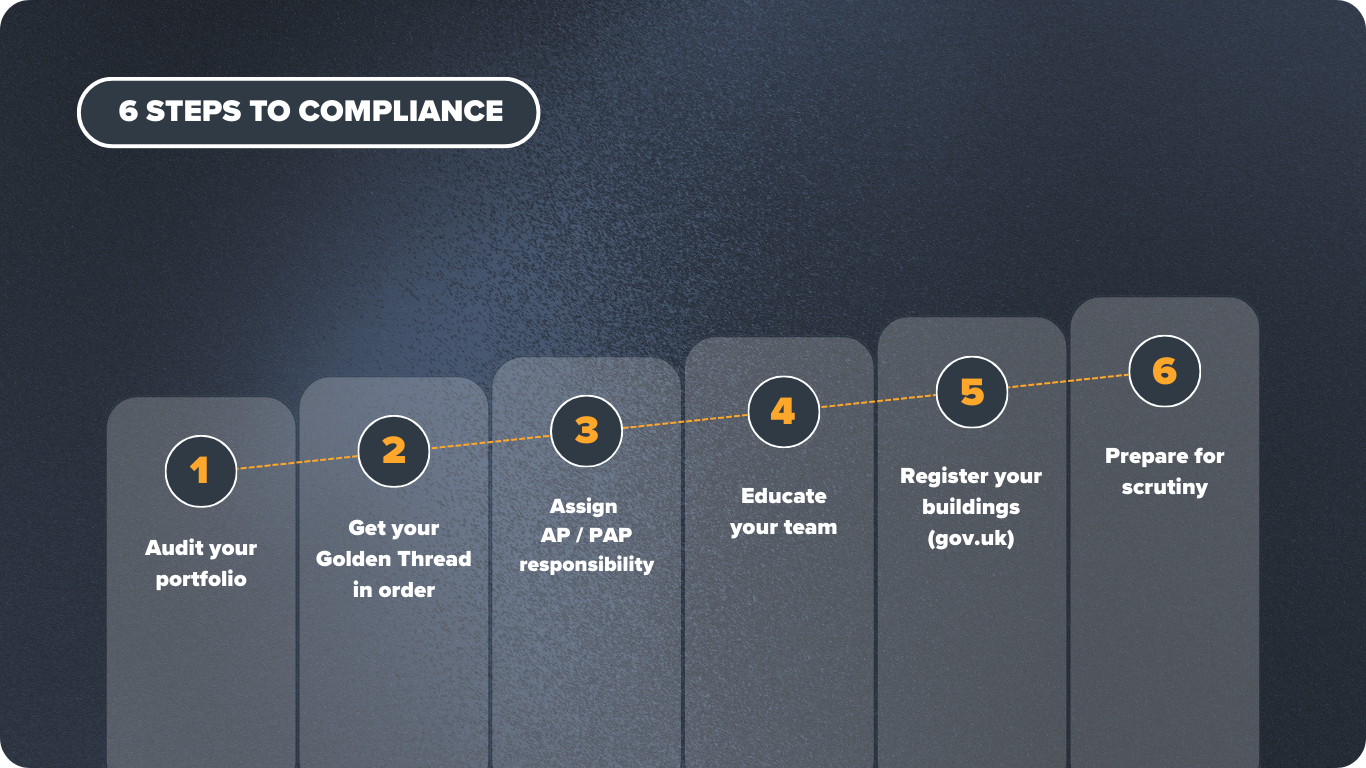
1. Audit your portfolio

Identify HRBs and any gaps in your current safety data


2. Get your Golden Thread in order

Find yourself a good CAFM


3. Assign responsibility

Know who your AP/PAP is, and make sure they know it too


4. Educate your team

Upskill on fire safety, golden thread, and digital recordkeeping


5. Register your buildings

Use the gov.uk portal


6. Prepare for scrutiny

Run mock audits, polish your safety case, and get resident engagement in motion

Who can help?

(You're not alone)

Industry bodies and training

When in doubt, ask the people who write the rules. Then double check with your legal team.

Final thoughts

Compliance = Competence + Confidence

Yes, the legislation is dense. And yes, it’s another plate to spin. But getting this right will:

  • Keep buildings safer
  • Protect you legally
  • Strengthen your operational credibility

The Building Safety Act 2022 isn’t about adding red tape. It’s about proving what great FMs have always done, keeping people safe, informed, and confident in the buildings they live and work in.

Latest News